
Interference
Interference
An interference is a contest between an application and either another application or a patent. An interference is declared to assist the Director of the United States Patent and Trademark Office in determining priority, that is, which part first invented the claimed invention within the meaning of the Patent Act before March 2013. This system followed the “first-to-invent” principle, where the patent was awarded to the first inventor in the event of multiple applications for the same invention. However, the current system in place in the US is the “first-to-file” principle, where the patent is awarded to the person who filed the patent first, regardless of the precedence of the invention. The US had a unique “first-to-invent” principle in 2012 when ToolGen’s CRISPR source(pioneer?) patent was filed. Most countries in the world operate a “first-to-file” system, including the US after the revision of the Patent Act in March 2013.
+ Read more− Close
Process of the Interference system
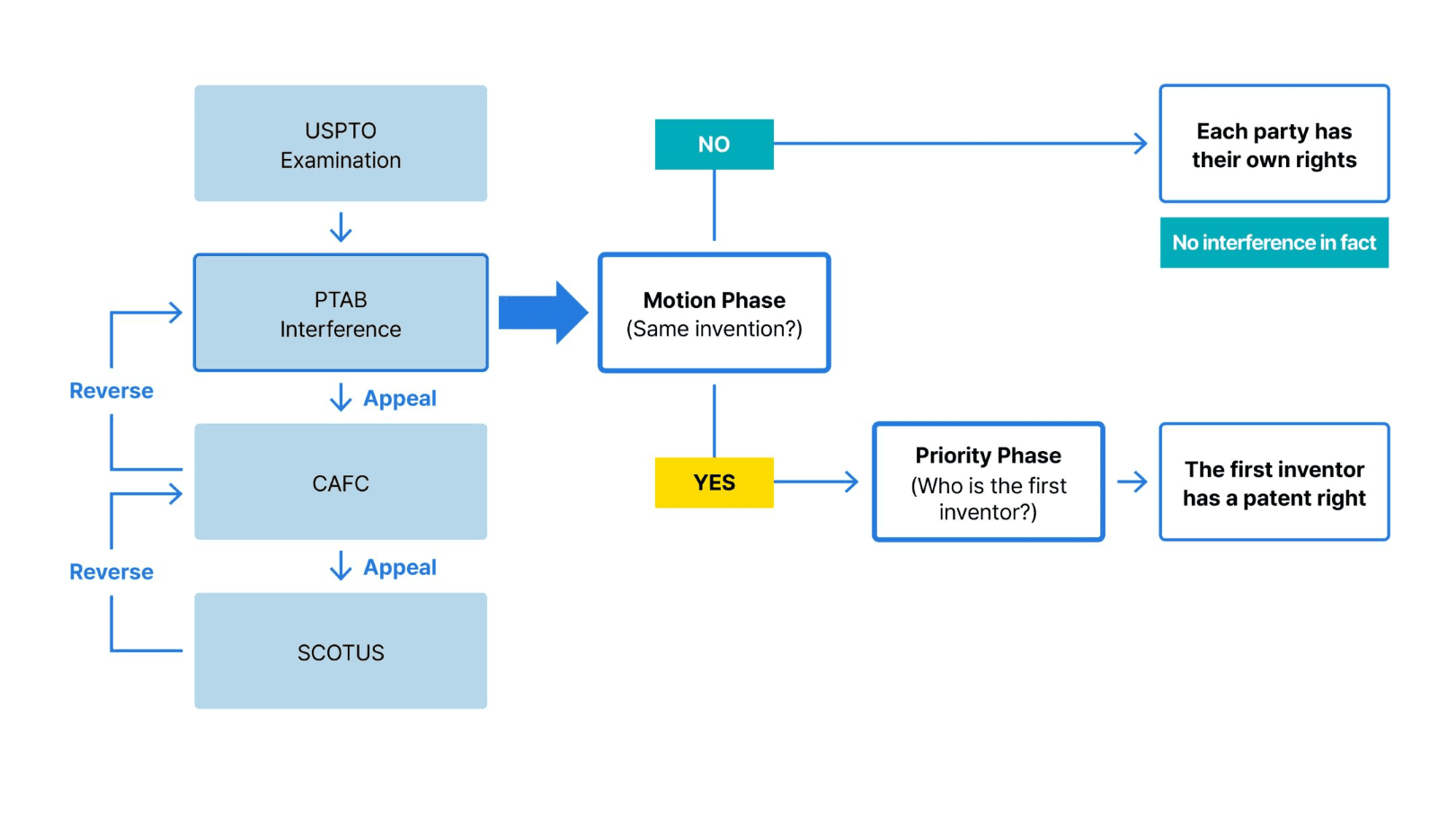
If there are multiple patent applications for the same invention, an interference proceeding can be initiated at the Patent Trial and Appeal Board (PTAB) in the US. The interference proceeding is a two-step process. In the first stage (motion phase), PTAB determines whether the inventions subject to an interference proceeding are the same inventions and who the first filed the patent applicant. If the inventions are not identical, the interference proceeding is terminated. If the inventions are the same, the second step (priority phase) is conducted to determine who the first inventor is among multiple applicants. In the second stage, the junior party (who filed the invention later) first submits a motion claiming to be the first inventor, followed by the senior party (who filed the invention first) claiming the first invention in response. The PTAB will then consider the parties’ arguments and evidence to determine who the first inventor is.
If a party is dissatisfied with the decision made by the (PTAB), they may appeal to The Court of Appeals for the Federal Circuit (CAFC) in the US. Similarly, if a party is dissatisfied with the decision made by the CAFC , they may appeal to the Supreme Court of the United States(‘SCOTUS’). These appeal processes allow parties to seek further review and potential reversal of a decision that they believe to be incorrect.
ToolGen Interference Status
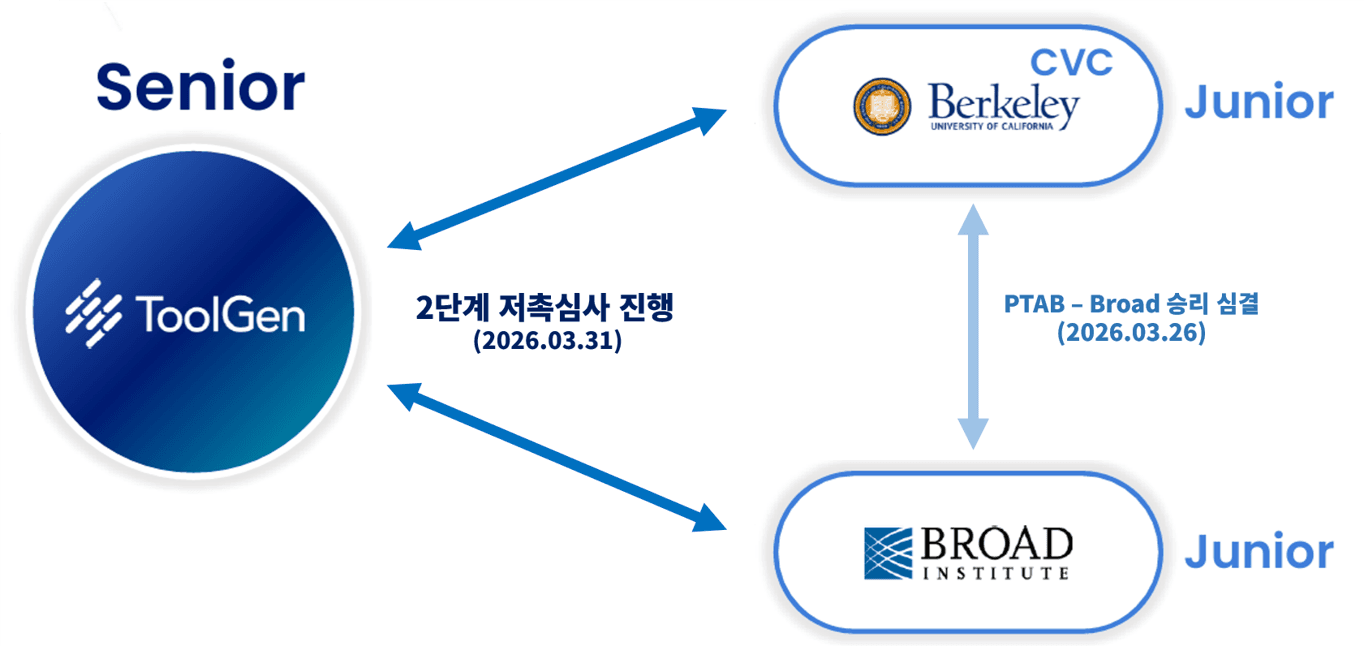
ToolGen is in patent interferences with the Broad Institute and CVC regarding eukaryotic CRISPR/Cas9. In September 2022, the PTAB confirmed ToolGen as the senior party, recognizing our earlier priority filing date over both groups.